Online Casino Payment Methods in Malaysia: E-Wallet, Banking, Cards & Crypto
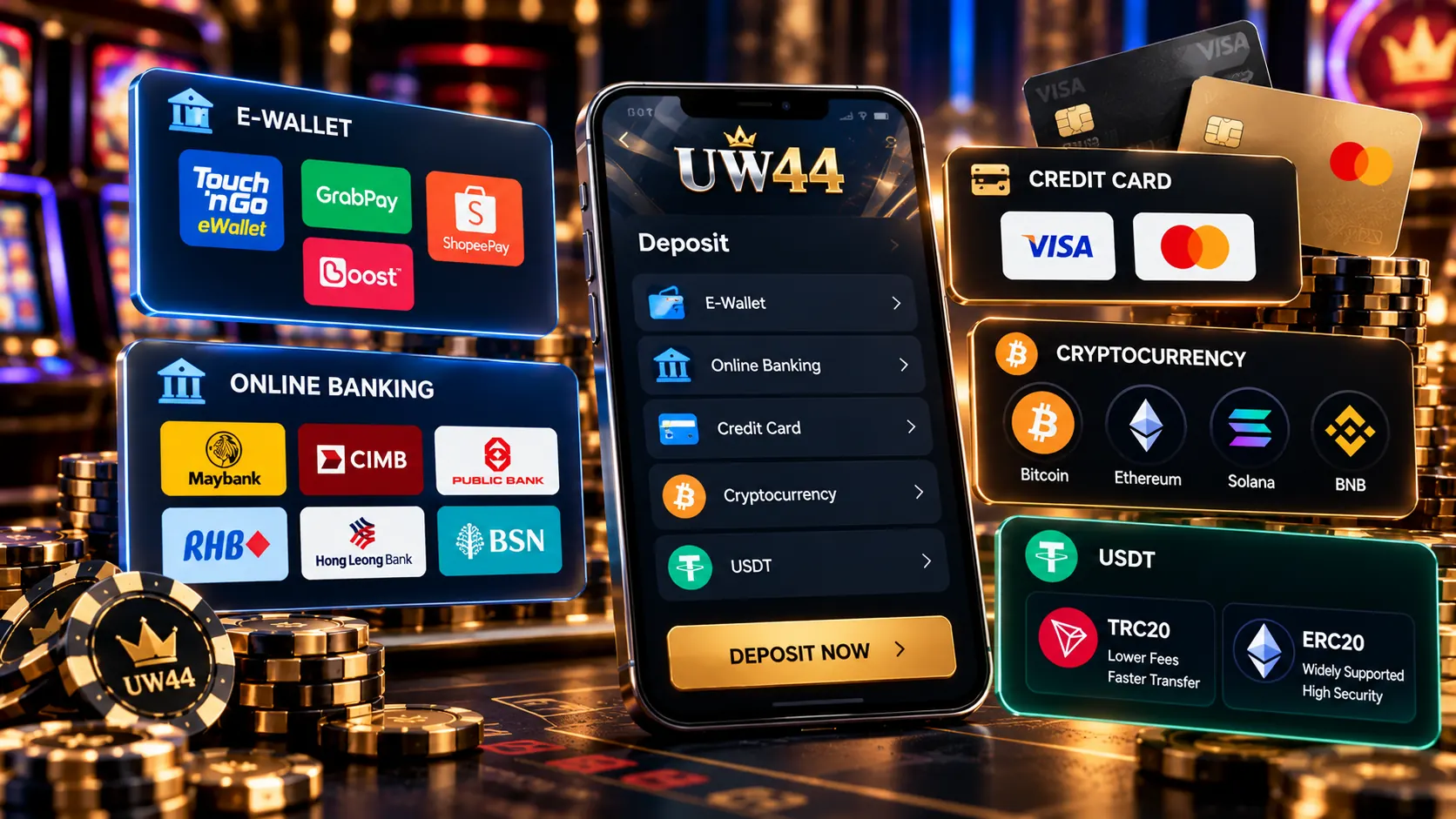
Choosing a payment method involves more than checking whether a transaction can be completed quickly. Fees, account verification, payment restrictions and withdrawal conditions can all affect the experience.
For Malaysian readers comparing online casino payment methods, there is another important consideration: a payment service that works for everyday purchases may not permit gambling-related transactions.
E-wallets, online banking, credit cards, cryptocurrency and USDT each operate differently. Understanding those differences can help readers identify costs, restrictions and potential problems before making financial decisions.
Which Payment Method Is Right for Different Needs?
Rather than treating one method as the best choice for everyone, it is more useful to compare their characteristics.
| Payment method | How it works | What to check |
|---|---|---|
| E-wallet | Payments through a digital wallet account | Provider restrictions, limits and fees |
| Online banking | Transfers through a bank account | Bank policies, recipient details and processing |
| Credit card | Payments through a card network | Issuer restrictions, fees and interest |
| Cryptocurrency | Transfers using blockchain networks | Network compatibility, volatility and security |
| USDT | Transfers of a dollar-referenced stablecoin | Token network, fees and stablecoin risks |
This comparison describes payment technologies generally. It does not establish that every method is available for online casino transactions in Malaysia.
E-Wallets and Online Banking: Familiar, but Not Identical
E-wallets and online banking are familiar to many Malaysians, yet they involve different service providers and transaction arrangements.
E-Wallet Payments
An e-wallet allows users to manage eligible payments through a mobile application or digital account.
Depending on the provider, features may include stored balances, transfers and merchant payments.
However, some e-wallet providers prohibit gambling-related transactions. Their availability for retail purchases should not be taken as evidence that casino payments are supported.
Other factors worth reviewing include account verification, balance limits, transaction fees and procedures for failed payments.
Online Banking Transfers
Online banking allows account holders to transfer funds and manage payments through their bank.
Banks may impose restrictions on gambling-related transactions or require additional checks. A transfer can also be affected by incorrect recipient details, security reviews or transaction limits.
When reviewing payment instructions, the recipient information should be clear and consistent. Unexpected requests to send money to unfamiliar accounts deserve particular caution.
The Key Difference
E-wallets generally operate through a wallet provider's payment system, while online banking relies on a banking institution.
Neither is automatically more suitable for casino payments. The relevant provider's terms and applicable laws determine what is permitted.
Credit Cards: Convenience Comes With Conditions
Credit cards are widely used for online purchases, but gambling-related transactions may be treated differently.
Acceptance depends on the card issuer, payment network, merchant classification and applicable regulations.
Some issuers restrict or block gambling transactions altogether.
There are also financial considerations that may be overlooked.
Fees and interest: Certain transactions can attract additional charges or be classified as cash advances or cash-equivalent transactions.
Foreign currency charges: Payments processed in another currency may involve conversion fees.
Disputes: Cardholder protections depend on the applicable rules and circumstances. A chargeback is not a way to recover ordinary gambling losses.
Before considering any card transaction, cardholders should understand the issuer's terms and the potential costs.
Cryptocurrency Payments: Understanding the Trade-Offs
Cryptocurrency transfers use blockchain networks rather than conventional bank-to-bank payment systems.
Bitcoin and Ether are examples of digital assets that can be transferred through their respective networks.
Their characteristics create several important differences from traditional payment methods.
Irreversible Transactions
Completed blockchain transfers generally cannot be cancelled or reversed through a standard payment dispute process.
An incorrect wallet address can therefore lead to permanent loss.
Network Fees
Blockchain transaction fees depend on the network and current conditions.
The cost of transferring an asset may change even when the amount being sent remains the same.
Price Volatility
The market value of cryptocurrencies such as Bitcoin and Ether can fluctuate significantly.
A transaction's value in Malaysian ringgit may change between the time it is planned and the time it is completed.
Security also matters. Anyone using a cryptocurrency wallet needs to understand the risks associated with private keys, recovery phrases and wallet access.
USDT Payments: Why the Network Matters
USDT, also called Tether, is a cryptocurrency known as a stablecoin.
Unlike Bitcoin, USDT is designed to maintain a value close to the US dollar. However, it is not equivalent to holding dollars in an insured bank deposit, and its value is not guaranteed.
One of the most important details is that USDT exists on different blockchain networks.
USDT TRC20 vs ERC20
| Feature | USDT TRC20 | USDT ERC20 |
|---|---|---|
| Network | TRON | Ethereum |
| Token standard | TRC20 | ERC20 |
| Transaction fees | Depend on TRON network conditions | Depend on Ethereum gas fees |
| Compatibility | Requires relevant TRON support | Requires relevant Ethereum support |
Although both versions are called USDT, they operate on different networks.
A sending service and receiving service must support the same token and network. Using an unsupported network can make transferred funds inaccessible or permanently lost.
Is USDT Safer Than Other Cryptocurrencies?
USDT is designed to reduce exposure to the price movements associated with some other cryptocurrencies.
That does not eliminate risk.
Stablecoins may face issuer, reserve, redemption, custody and regulatory risks. They can also trade away from their intended reference value.
USDT's technical characteristics should be understood before assuming it offers the same protections as a traditional financial account.
Why Deposits and Withdrawals Can Take Different Amounts of Time
A payment being sent does not always mean it has been fully processed by the receiving service.
For example, a cryptocurrency transfer might receive blockchain confirmations while the receiving platform is still conducting account checks.
A bank transfer can also be affected by processing arrangements or security reviews.
Common reasons for delays include:
- Incomplete identity verification
- Incorrect payment information
- Payment-provider restrictions
- Transaction limits
- Blockchain confirmation requirements
- Compliance and fraud-prevention reviews
- Platform-specific withdrawal conditions
These factors explain why advertised processing speeds should not be treated as guarantees.
Five Questions Worth Asking Before a Transaction
Payment comparisons become more useful when they focus on actual conditions.
1. Is the transaction permitted?
Check the applicable laws and payment-provider terms. Gambling-related transactions in Malaysia are subject to legal restrictions.
2. Is the payment method supported?
Do not assume that a widely used e-wallet, bank card or cryptocurrency is accepted by a particular platform.
3. What fees apply?
Look beyond the transaction amount. Charges may include processing fees, network fees, currency conversion or card-related costs.
4. What happens if something goes wrong?
Find out whether a failed payment can be investigated and whether any recovery or dispute process exists.
5. Are there separate withdrawal requirements?
Identity verification, account restrictions and withdrawal conditions may differ from deposit requirements.
Clear answers to these questions are more useful than broad promises of convenience or speed.
Payment Information and the UW44 Platform
UW44 presents itself as a VIP online casino platform featuring slots, live casino, fishing games and arcade entertainment.
Payment information is relevant to understanding any online platform, but it should be based on verified operating terms rather than assumptions.
The payment methods discussed in this article are general examples. They do not confirm that UW44 accepts e-wallets, online banking, credit cards, cryptocurrencies or USDT.
For platform-specific information, readers can consult the UW44 deposit guide and UW44 withdrawal guide, once the published instructions have been verified.
Additional information about UW44 is available through the official UW44 homepage.
Frequently Asked Questions
Is USDT considered cryptocurrency?
Yes. USDT is a cryptocurrency classified as a stablecoin. It is designed to maintain a value close to the US dollar.
What is the difference between USDT TRC20 and ERC20?
TRC20 USDT operates on TRON, while ERC20 USDT operates on Ethereum. They use different networks, and transfers require compatible network support.
Can credit cards be used for online casino payments in Malaysia?
Card issuers, payment networks and applicable regulations may restrict gambling-related transactions. Acceptance should never be assumed.
Are cryptocurrency transactions refundable?
Completed blockchain transactions are generally irreversible. Recovery is not guaranteed and depends on the circumstances.
Do e-wallet payments always process immediately?
No. Processing depends on the provider, transaction type and any additional checks.
Does a successful deposit guarantee a successful withdrawal?
No. Withdrawal requests can be subject to separate verification, eligibility and processing conditions.
Are online casino payment methods legal in Malaysia?
The use of a payment technology does not determine whether the underlying gambling transaction is lawful. Malaysian legal restrictions and payment-provider policies must be considered.
Final Thoughts
Online casino payment methods differ in cost, technical requirements, restrictions and consumer protections.
E-wallets and online banking depend on financial-service providers. Credit cards involve issuer and network rules. Cryptocurrency and USDT introduce blockchain-specific risks, including network compatibility and irreversible transfers.
For Malaysian readers, understanding these conditions is more important than choosing a payment method based solely on convenience.
Responsible Gaming: Gambling involves financial risk and is subject to applicable laws and age restrictions. Payment convenience does not reduce the possibility of gambling losses.
About the Author
Jason Tan
UW44 Online Casino Guides
Jason Tan is credited as the author of this guide covering digital payment methods, transaction considerations and financial risks.
Author Profile: LinkedIn